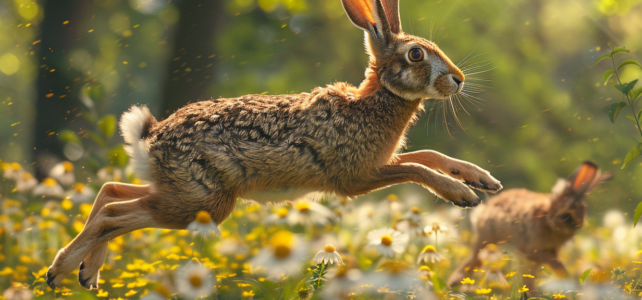
Hares, agile and often enigmatic creatures, are scattered across various ecosystems, playing a key role in biodiversity. Their reproduction cycle sparks particular interest, as it involves unique behaviors and strategies adapted for survival in sometimes hostile conditions. These mammals are distinguished not only by their ability to be born with a full coat and open eyes but also by their method of nesting directly on the ground, which exposes them to distinct threats. Deciphering these characteristics allows for a better understanding of the challenges these species face.
The Secrets of Reproduction in Hares
The Reproduction Cycle in hares begins with the first stirrings of nature, often well before humans perceive the signs of spring. This early rhythm is an adaptation strategy, aligning the birth of young with a period when food resources begin to abound. This synchronization is fundamental, as it optimizes the survival chances of newborns in a world rich in predators.
In these elusive animals, the female hare can give birth to several litters annually, a fact that reflects great fertility. These successive litters are an evolutionary advantage, compensating for the high mortality rate of young hares in their natural habitat. The female’s ability to reproduce multiple times within the year is thus a safeguard against the rapid decline of populations.
The rapid sexual maturity of hares is another remarkable feature of their life cycle. These species can reproduce shortly after birth, allowing for accelerated population regeneration. This phenomenon, combined with the females’ ability to conceive again immediately after giving birth, creates a life dynamic where every moment counts for the perpetuation of the species.
The reproductive strategies of hares are closely linked to their environment. Climate changes and ecosystem modifications directly influence the reproductive behavior of these animals. Scientists observe remarkable adaptability in hares, capable of altering their behavior to optimize their chances of reproduction in the face of new environmental challenges. This demonstrates biological flexibility in response to nature’s pressures and the necessity for attentive ecological monitoring to ensure the survival of these discreet members of the animal kingdom.
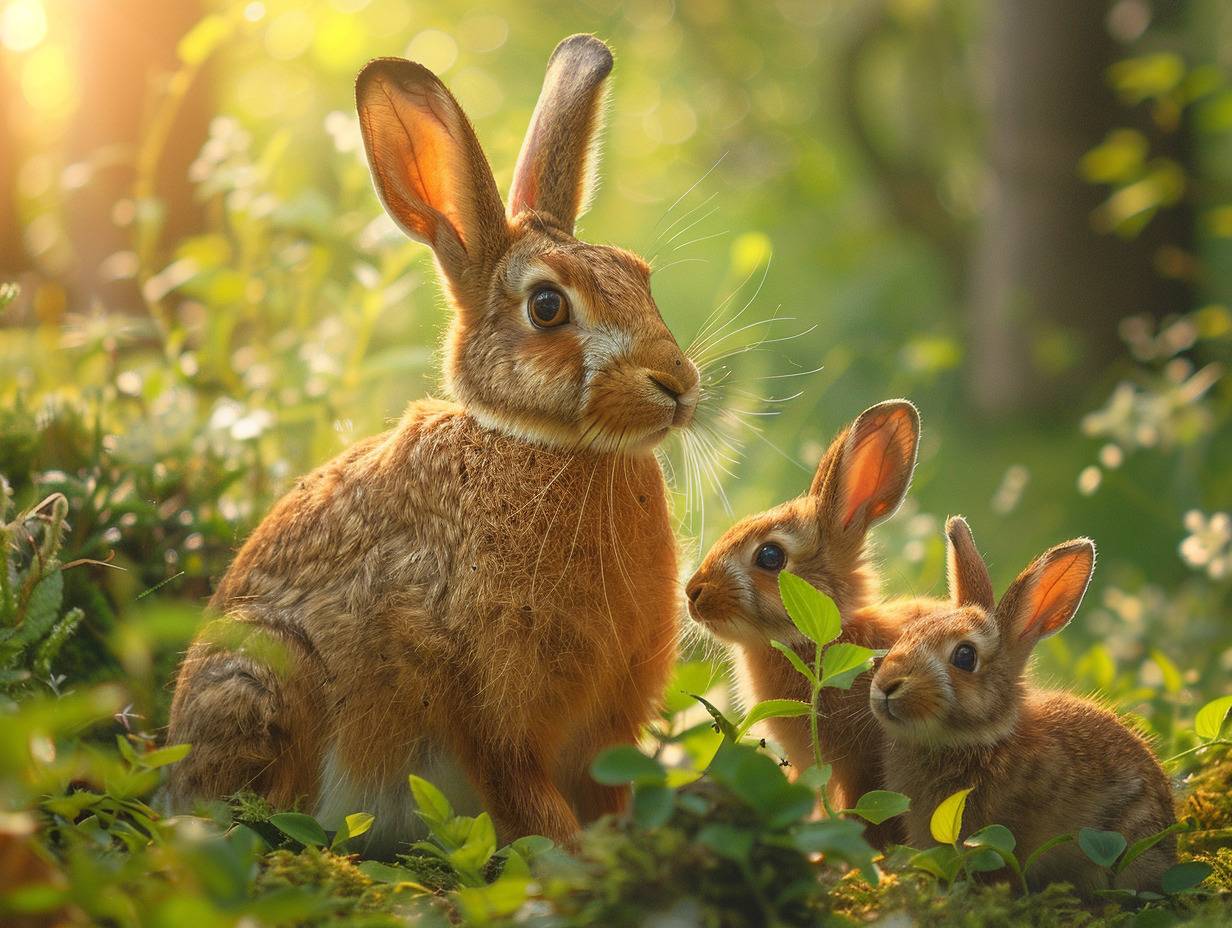
Unique Characteristics and Adaptation of Hares to Their Environment
The hare, with its long hind legs and large ears, is the emblem of a successful adaptation to varied environments. Their physiology serves both for early predator detection and for a frantic escape when faced with a threat. The agility and speed of this animal are assets that have been refined over evolution, allowing it to survive in open spaces where fleeing is often the only viable option.
The panoramic vision of hares, conferred by the lateral position of their eyes, allows them to monitor their environment without moving their heads, a crucial feature for an animal that must remain vigilant at all times. This visual ability complements their keen hearing, which can detect low-frequency sounds that signal imminent danger.
In terms of behavior, these mammals tend to be solitary, thus avoiding drawing attention to themselves. They prefer habitats that offer a balance between cover and open space, a strategic choice to optimize both hiding and fleeing. Their ability to remain motionless for long periods also contributes to their invisibility to predators.
The adaptation strategies of hares in response to climatic conditions are also remarkable. They can withstand extreme temperatures, whether it be the summer heat or the biting cold of winter. Their fur changes color with the seasons, shifting from brown to white, a camouflage method that reflects a deep harmony with the natural cycle of their environment. These adaptations, both physical and behavioral, illustrate the ability of hares to adjust to the variability of nature, ensuring their persistence within terrestrial biodiversity.