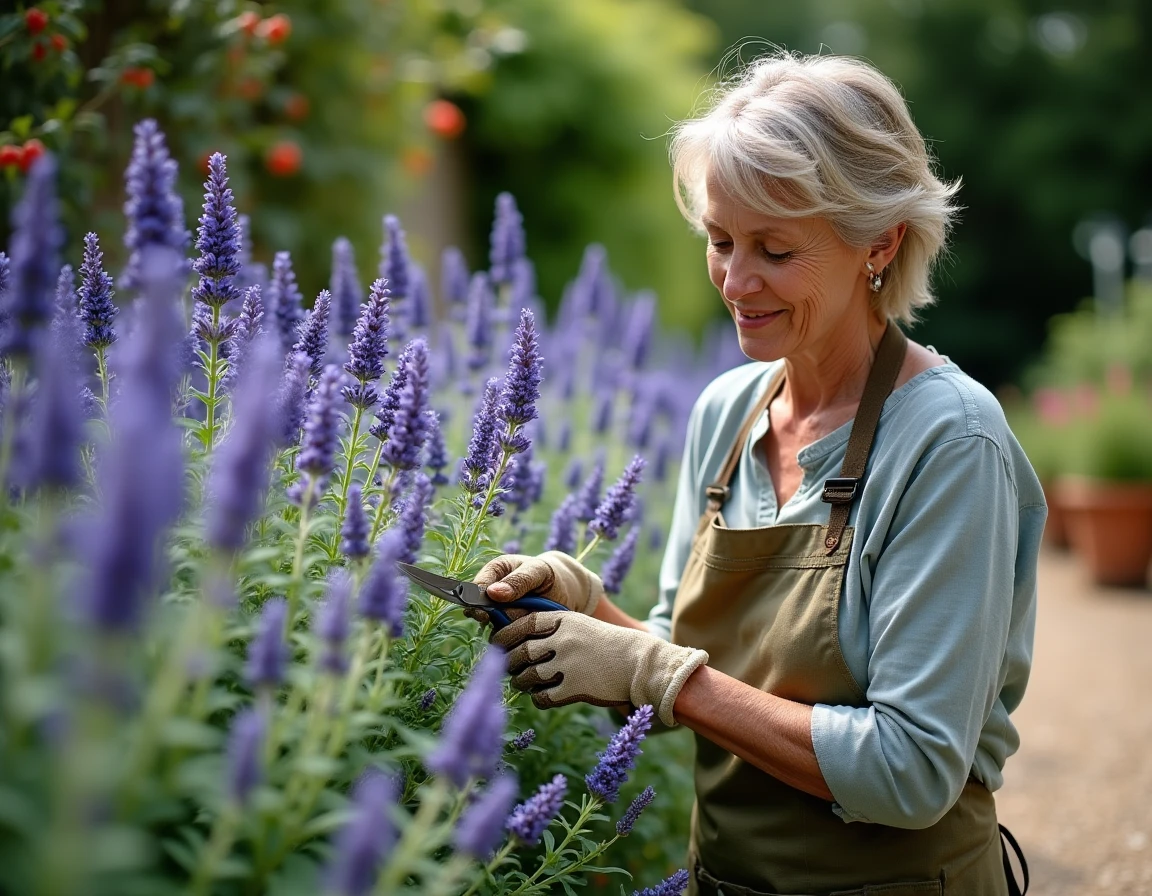
The blue bush sage (Salvia ballotiflora) does not respond to pruning like Salvia microphylla or common sage. Its ability to regrow after severe cutting, its response to a second summer cut, and the influence of exposure on the final result make it a unique case within the Salvia genus. Understanding these particularities allows for calibrating each intervention to achieve a longer flowering period and a denser growth habit.
Tolerance to pruning according to species of bush sage
Not all bush sages tolerate the same intensity of cutting. This is the most misunderstood parameter in general guides, which treat the Salvia genus as a homogeneous block.
| Species / group | Spring pruning intensity tolerated | Regrowth after severe pruning |
|---|---|---|
| Salvia ballotiflora (blue bush sage) | Up to two-thirds of the height | Vigorous, improved summer flowering |
| Salvia microphylla (type ‘Hot Lips’) | One-third to half of the height | Good, but risk of thinning if cut too low |
| Salvia officinalis (common sage) | Light pruning, do not cut into old wood | Poor on lignified wood |
Salvia ballotiflora accepts a cut back to two-thirds of its height in early spring, where other species would lose entire branches. This tolerance is due to its ability to produce new shoots directly from semi-lignified wood, a behavior not shared by common sages.
Mastering the pruning of blue bush sage therefore first requires accurately identifying the cultivated species, then adapting the severity of the action.
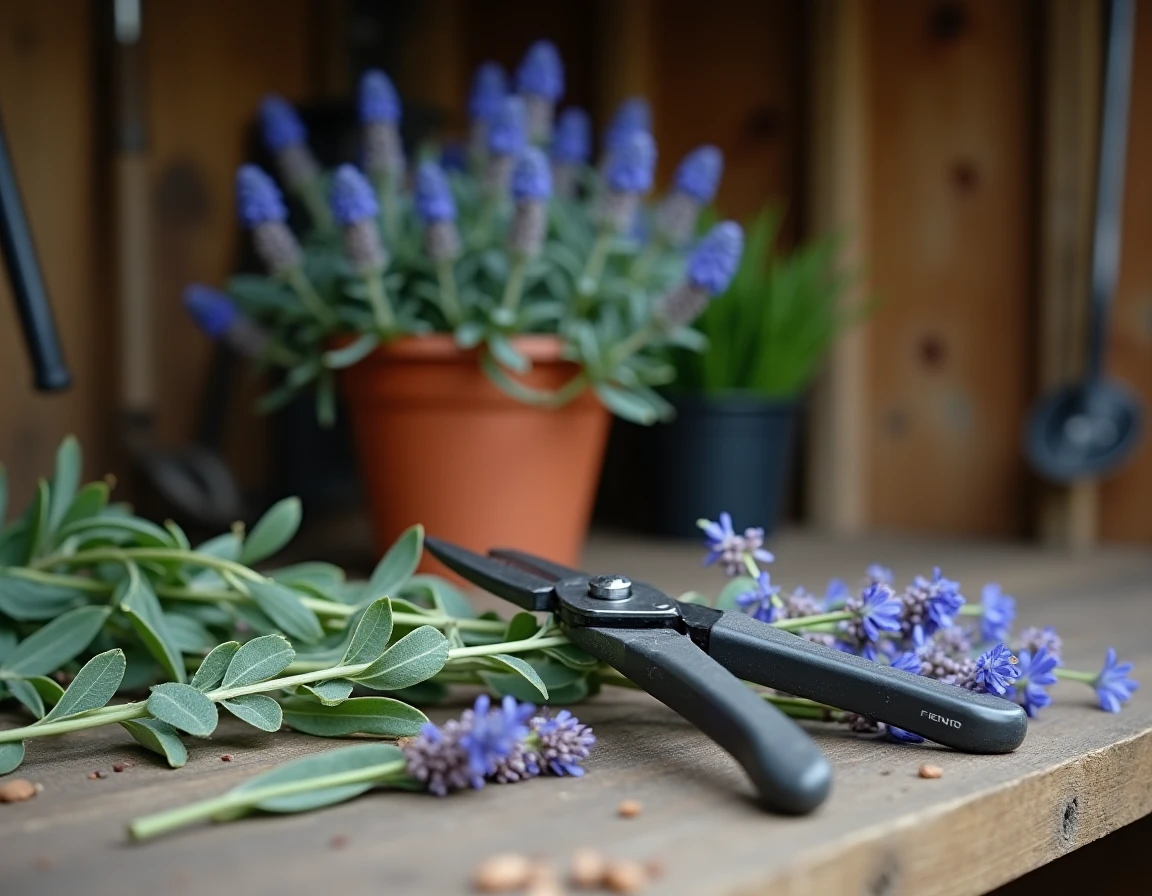
Mid-summer pruning on Salvia ballotiflora: the lever to extend flowering
Spring pruning structures the plant. Mid-summer pruning prolongs the display. The two do not serve the same function and are not performed in the same way.
Principle of summer cutting
After the first wave of flowers, usually in June or July depending on the local climate, a light shortening of the faded stems produces a double effect. The plant produces new lateral branches, making it denser and more compact. It also initiates new flower buds.
The documented result on Salvia ballotiflora is a prolonged flowering until autumn, whereas an unpruned plant in summer often stops flowering by the end of summer. This gain of several weeks makes a difference in a flowerbed or low hedge.
How to proceed concretely
- Wait until the majority of the spikes from the first wave have faded, without allowing the seeds to form completely
- Shorten the flowering stems by one-quarter to one-third of their length, cutting just above a node with healthy leaves
- Do not touch the lower unflowered branches, which ensure photosynthesis and nourish regrowth
- Water moderately in the following days if the soil is dry, to support the production of new shoots
This summer pruning does not replace spring cutting. It complements it. Skipping either one reduces the flowering potential.
Exposure and pruning of blue sage: an inseparable pair
The response of Salvia ballotiflora to pruning varies according to the amount of light received. This parameter is rarely taken into account in standard pruning calendars.
In full sun, the plant tolerates a strong cut in spring and responds quickly. The internodes remain short, the growth habit stays compact, and flowering starts early. Conversely, in a semi-shaded urban garden, blue sage produces longer and more flexible stems, with delayed flowering.
In this second situation, spring pruning should be less severe to maintain sufficient leaf surface area. A cut back to two-thirds, suitable in full sun, risks hindering recovery in partial shade. A shortening of one-third to half of the height yields better results.
Mid-summer pruning remains relevant in partial shade, but the delay before the second flowering extends. Expect a few extra weeks compared to a south-facing exposure.
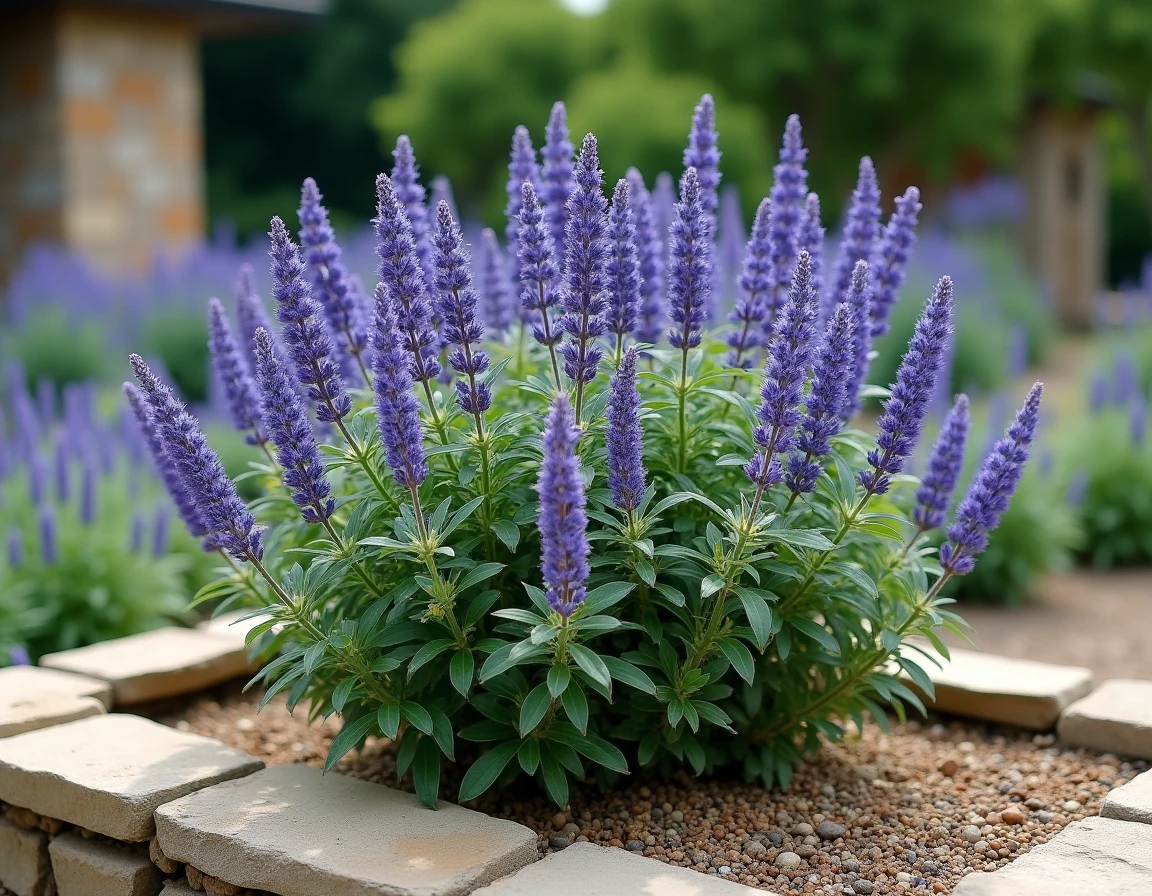
Common pruning mistakes on blue bush sage
Three mistakes frequently occur and compromise flowering more than the complete absence of pruning.
- Pruning in autumn or early winter: the new shoots stimulated by the cut are vulnerable to frost. The plant enters the cold season weakened. Spring, once the vegetation has visibly restarted (green buds on the stems), remains the only safe time for structural cutting
- Cutting systematically to the ground: Salvia ballotiflora regrows from semi-lignified wood, not from the crown. A total cut removes the starting points for new shoots and can kill the plant
- Using a dull pruning shear: the semi-woody stems of bush sage easily crush under a dull blade, opening the door to fungal diseases. A clean and sharp cut heals much faster
These mistakes are all the more damaging as Salvia ballotiflora takes a whole season to rebuild its structure after a failed cut.
The pruning calendar for blue bush sage ultimately boils down to two well-placed actions: a spring cut adapted to the exposure, followed by a summer shortening of the faded stems. These two interventions are sufficient to maintain a dense growth habit and a flowering spread over several months, without multiplying visits to the garden.