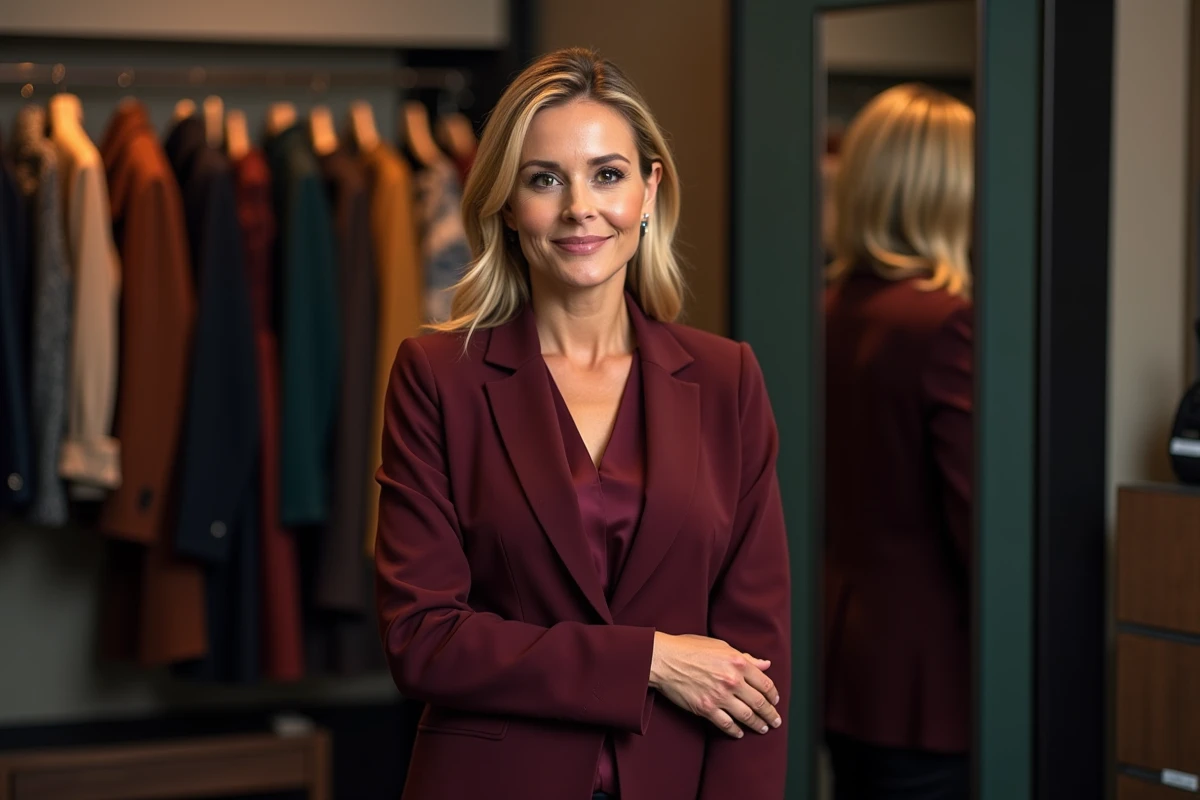
Anne-Elisabeth Lemoine does not work alone in front of her mirror. Since her debut hosting C à vous on France 5, the presenter has gradually structured a dressing process that combines personal taste, editorial constraints of public service, and collaboration with the internal stylists of France Télévisions. Understanding this mechanism is to grasp how a coherent television style is crafted over time.
Constraints of sobriety imposed by France Télévisions on on-air outfits
In 2022, France Télévisions strengthened its internal guidelines on the sobriety of on-air looks. An internal memo, mentioned by Télérama in an investigation dedicated to the dressing of public service faces, details several direct restrictions.
Three axes structure this framework:
- Limitation of visible logos: the pieces worn on screen must not display recognizable monograms or brand signatures at first glance, to avoid any perception of product placement.
- Encouragement of French brands: management encourages female and male presenters to prioritize ready-to-wear from France, which mechanically directs purchases and loans towards houses like Sandro, Maje, or independent Parisian designers.
- Reduction of ostentatious luxury: highly identifiable pieces (branded bags worn crossbody, high jewelry) are discouraged on air, in a logic of coherence with the positioning of public service.
This framework does not formally prohibit anything, but it weighs on every outfit choice. Anne-Elisabeth Lemoine therefore operates within a stylistic corridor narrower than one might imagine from their couch.
For those who wish to discover who dresses Anne-Elisabeth Lemoine in detail, the subject goes beyond mere taste: it involves a validation protocol specific to the channel.
Role of internal stylists of France Télévisions in outfit selection
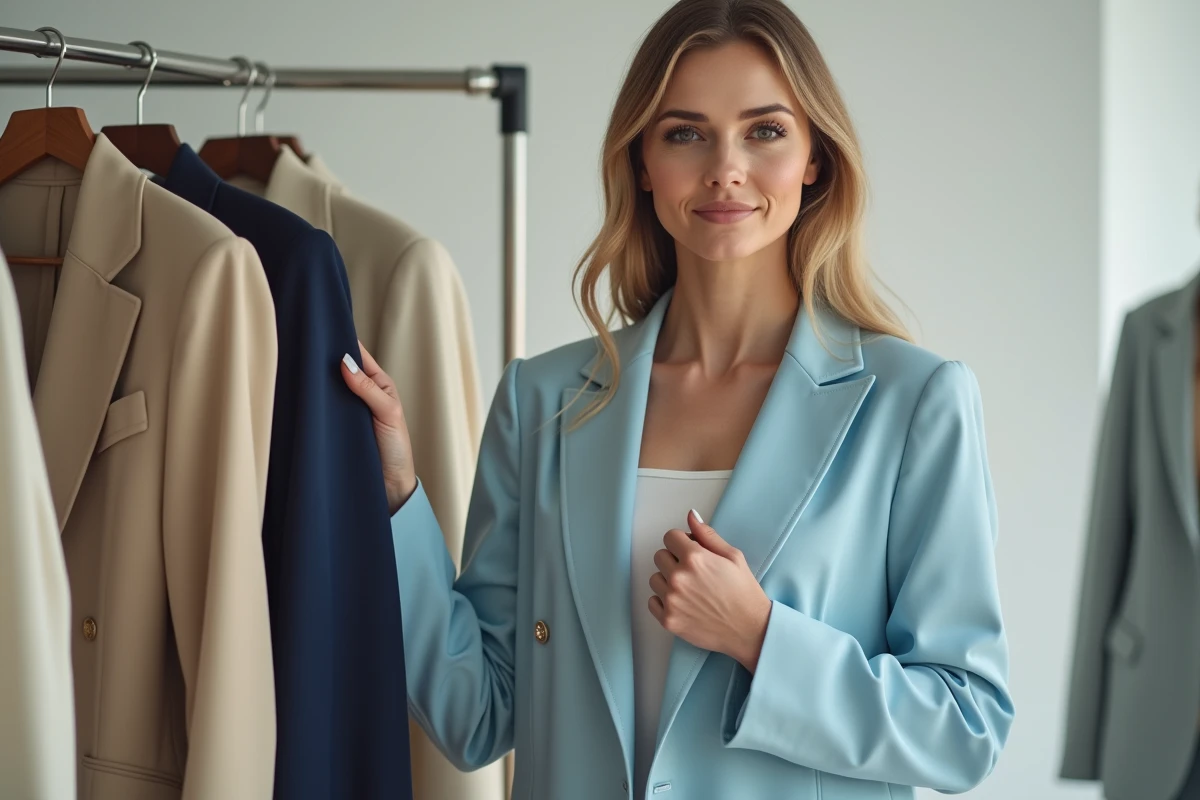
Since 2023, Anne-Elisabeth Lemoine has publicly acknowledged that she increasingly relies on the dressers and internal stylists of the group to validate or adjust her looks before going on air. At the beginning of C à vous, she predominantly chose her outfits alone. This shift is not insignificant.
The dressers of France Télévisions intervene at several levels. They check the appearance of materials under studio lighting (a fabric that is too shiny or too thin creates artifacts on camera). They control color compatibility with the studio decor, which changes with the seasons. They also suggest last-minute adjustments, such as repositioning a belt, raising a collar, or removing a bracelet.
The process functions as an editorial filter applied to clothing. The presenter arrives with a selection, and the stylists validate or suggest an alternative. We observe here a classic pattern in French audiovisual media, but the degree of collaboration varies greatly from one show to another. On C à vous, the daily format (five shows a week) imposes a pace that excludes lengthy fitting sessions. Decisions are made in a matter of minutes, often on the morning of the broadcast.
Structured jackets, raw jeans, and white sneakers: the fashion signature of Anne-Elisabeth Lemoine
The style that emerges from this collaborative mechanism has identifiable constants. Several multi-brand retailers in Paris and Lille have confirmed in Challenges a clear increase in requests explicitly centered around the “look of Anne-Elisabeth Lemoine,” coming from a clientele aged 40 to 60.
Three pieces consistently appear in these requests: the structured jacket (shouldered blazer, slightly oversized cut), the raw straight-cut jeans, and the minimalist white sneaker. This triptych works on screen because it ticks all the boxes of the internal memo: no visible logo, possible French sourcing, polished appearance without ostentation.
What makes this signature effective on a television level is its reproducibility. A navy blazer can be worn five days in a row without the viewer perceiving repetition if the accessories change. The presenter plays with variations in texture (tweed, crepe, gabardine) rather than bright colors, allowing her to refresh her image without stepping outside the framework imposed by the channel.
The prescriptive effect measured in stores
The impact of these choices extends beyond the studio. The phenomenon documented by Challenges shows that daily television generates a more lasting prescriptive effect than magazine coverage. A presenter seen five evenings a week for months anchors a wardrobe vocabulary in the minds of her audience, whereas a one-off photoshoot is forgotten in a few days.
Platforms like DressingDuPaf have specialized in identifying pieces worn by television personalities, and outfits worn by Anne-Elisabeth Lemoine are among the most sought after. This circuit, from screen to search engine to store, constitutes an influence channel that mid-to-high-end ready-to-wear brands are now actively exploiting.
Stylistic autonomy and editorial framework: a balance unique to C à vous
Anne-Elisabeth Lemoine stated in Madame Figaro that her wardrobe “is full of clothes that do not go together.” This frankness reflects a relationship with clothing that is not that of a woman entirely guided by a stylist. She retains the initiative in her choices, while the channel exercises oversight.
This model differs from that practiced on other shows in the PAF, where some presenters completely delegate their wardrobe to an external artistic director. On C à vous, the intimate and conversational format requires that the outfit reflects the personality of the wearer. A look that is too “produced” would create a dissonance with the tone of the show.
The question of age also plays a role in the equation. Anne-Elisabeth Lemoine has stated that she sees no reason to impose an age limit on certain clothing, particularly defending the wearing of pieces perceived as “young.” This publicly assumed position aligns with a broader trend of questioning age-related dress codes in French media.
The visible result on screen each evening is the product of this controlled tension between personal taste, channel norms, and everyday pragmatism. A television style is not decreed; it is negotiated, show after show.