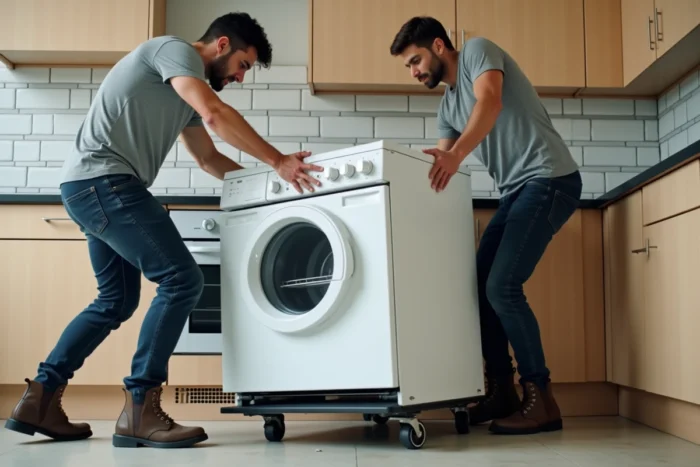
An electric stove weighs on average between forty and sixty kilograms, with a high center of gravity due to the oven. This structural imbalance explains why transporting this appliance often causes damage that is only detected during the first heating, once installed in the new home.
Door glass and internal connections: the fragile points to know before transport
Traditional moving guides emphasize the outer packaging. They overlook the main issue: the internal components and the door glass are the first victims of poorly prepared transport.
Manufacturers, particularly Whirlpool in its recent installation manuals, indicate that the door glass is particularly susceptible to micro-cracks during vertical shocks. These cracks are not visible to the naked eye. They weaken the glass, which can shatter during a temperature rise after installation.
The internal connections pose another type of risk. The heating elements are secured by wiring that does not tolerate prolonged tilting or repeated jolts well. A loose wire inside the oven can cause a short circuit or an uneven heating zone, with no visible signs from the outside. To know how to lay an electric stove down according to 123 Net Immo, one must first identify the model and its internal fastening constraints.
Ratchet straps and wide platform dolly: the equipment that really makes a difference
Two strong arms are not enough. Several emergency services and firefighter unions report an increase in domestic accidents related to handling stoves during moves: electrical burns and falls due to lifting without appropriate equipment, with a peak observed in June and July, the end-of-lease period.
The equipment recommended by installers and manufacturers boils down to a few specific items:
- A wide platform dolly, whose support surface must cover the entire base of the stove to prevent lateral tipping during movement on stairs or uneven ground.
- Certified ratchet straps, which secure the appliance against the dolly and then against the vehicle wall. Elastic straps do not provide constant tension and allow the appliance to move during braking.
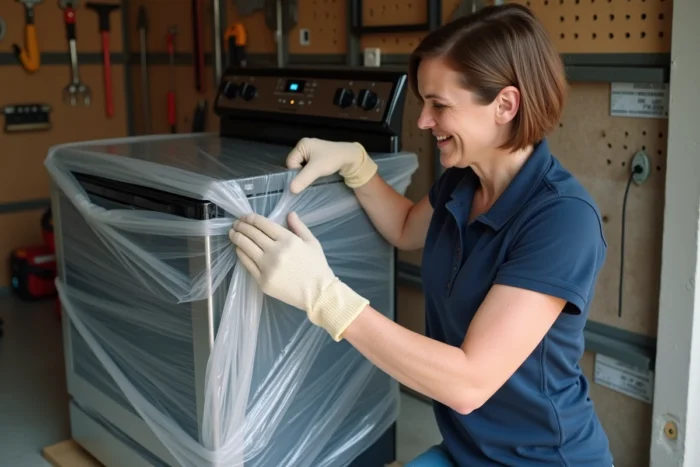
- Thick bubble wrap or moving blankets wrapped around the oven door and sides, to absorb vibrations and protect the glass.
- Strong adhesive tape to keep the oven door closed, without sticking it directly to the enameled surface (risk of pulling off the coating).
This equipment is not optional. Recent installation guides explicitly mention it as a condition for maintaining the manufacturer’s warranty on certain models.
Home insurance and DIY transport: a gray area not to be ignored
The issue of insurance coverage is rarely addressed in moving advice, even though it has direct financial consequences.
Since 2023-2024, several home insurers in France specify in their general conditions that claims related to a “DIY transport” of large appliances may lead to reduced compensation. MAIF and Groupama specifically mention the lack of securing and transport by non-professionals as aggravating factors.
In practice, this means that electrical damage occurring after a move carried out without documented precautions (photos of the equipment used, invoice for renting a professional dolly) can be contested by the insurer. Field reports vary on the systematic application of these clauses, but their mere existence in the notices justifies a minimum of precaution.
Documenting the transport to protect yourself
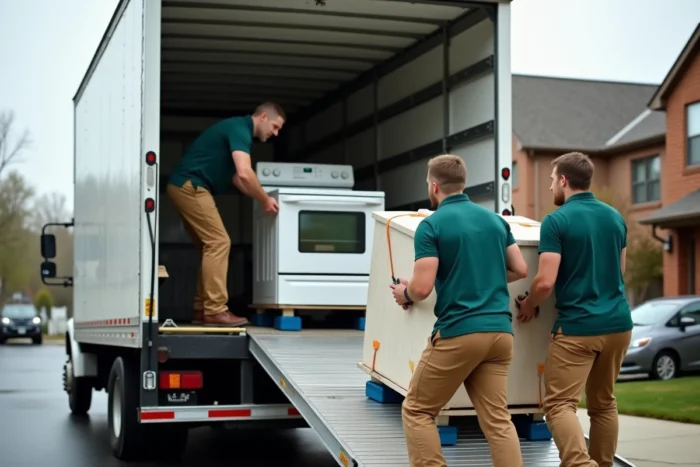
Taking a few photos before, during, and after loading the stove into the vehicle serves as proof in case of a dispute. Photograph the condition of the door glass, the securing system used, and the position of the appliance in the truck.
Recommissioning after transport: checks before the first heating
Plugging in the stove immediately after placing it in the kitchen is a common mistake. Several checks are necessary before any power-up.
First, check the stability of the appliance on its adjustable feet. A slightly sloped floor can cause abnormal vibrations during the oven’s operation. Use a level on the cooking surface.
Open the oven door and visually inspect the interior: heating elements in place, no loose parts or screws fallen to the bottom of the cavity. Some manufacturers and installers now explicitly recommend waiting for a check of the stability of the electrical connections before the first heating, especially if the appliance has been tilted or laid down during transport.
Remove all protective materials (tape, bubble wrap, blankets) before turning on the oven. Residue from glue on the glass or a forgotten blanket inside can generate toxic fumes during the first temperature rise.
Transporting an electric stove relies less on physical strength than on method. An appropriate dolly, ratchet straps, targeted protection of the door glass, and a few photos for insurance transform a risky operation into a controlled move. The check upon arrival remains the last step not to be overlooked, because internal damage only reveals itself at the first ignition.